API Testing
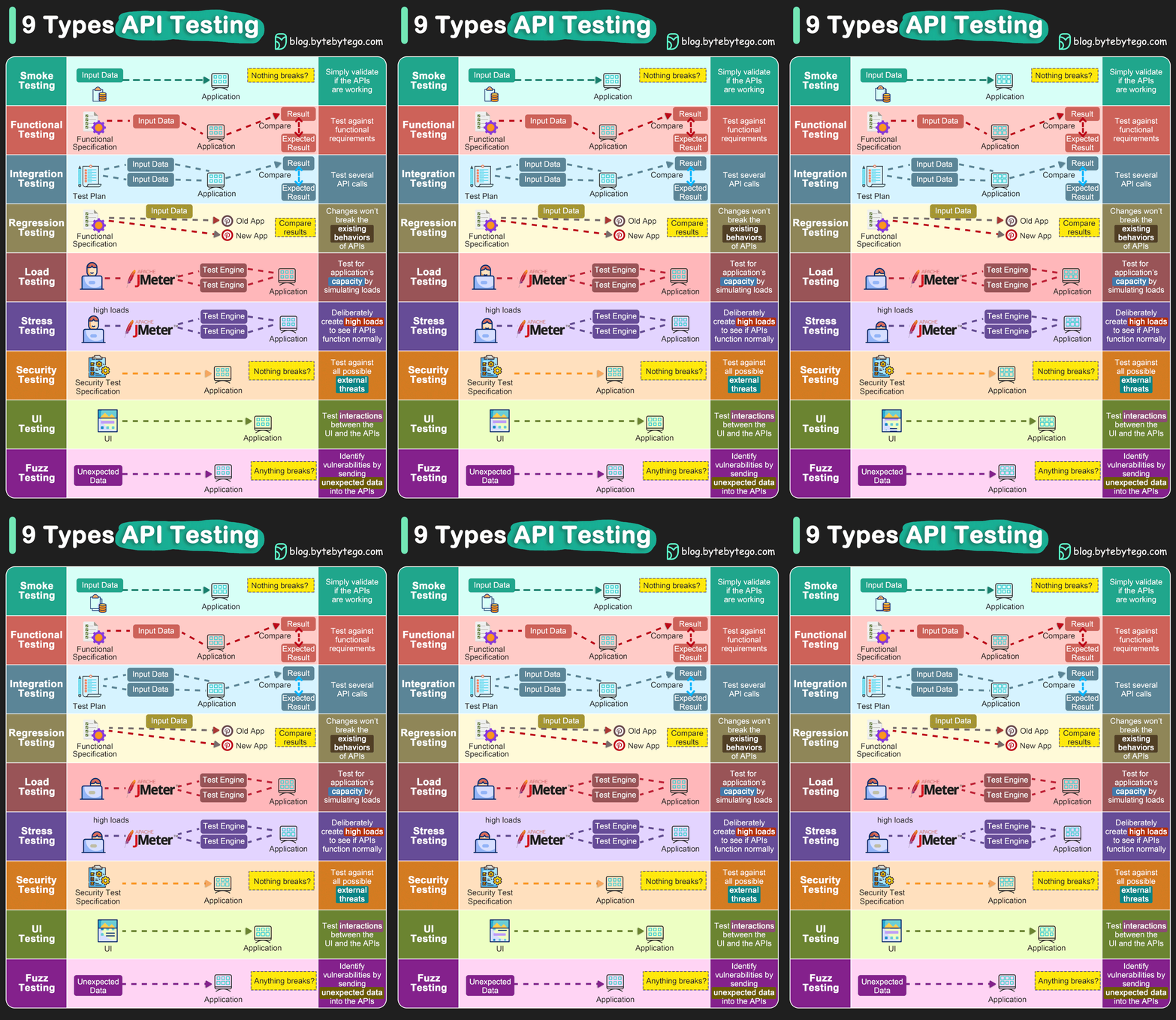
API testing involves a wide range of tests that cover various aspects of functionality, performance, security, and reliability. Here’s a comprehensive list of different types of tests for APIs:
1. Functional Testing
- Purpose: To verify that the API functions as expected.
- Tests Include:
- Unit Testing: Testing individual functions or endpoints in isolation.
- Integration Testing: Ensuring that different modules or services interact correctly.
- End-to-End Testing: Testing the complete flow from the start to the end of a process.
- Contract Testing: Verifying that the API adheres to the agreed-upon contract (e.g., input/output structure).
- Smoke Testing: Basic tests to check if the API’s basic functionality is working.
2. Performance Testing
- Purpose: To assess the API’s performance under various conditions.
- Tests Include:
- Load Testing: Evaluating performance under expected user load.
- Stress Testing: Pushing the API beyond its limits to see how it handles high traffic.
- Spike Testing: Testing how the API handles sudden spikes in traffic.
- Soak Testing: Running the API under a significant load for an extended period.
- Scalability Testing: Determining how well the API scales with increased load.
- Benchmark Testing: Comparing the API’s performance against predefined benchmarks.
3. Security Testing
- Purpose: To ensure the API is secure and protected against vulnerabilities.
- Tests Include:
- Authentication Testing: Verifying that the API correctly enforces authentication.
- Authorization Testing: Ensuring that users can only access resources they are authorized to.
- Penetration Testing: Simulating attacks to identify vulnerabilities.
- Fuzz Testing: Sending random data to the API to identify potential crashes or vulnerabilities.
- Data Validation Testing: Ensuring that the API properly validates input data.
- Encryption Testing: Checking if sensitive data is correctly encrypted.
4. Usability Testing
- Purpose: To assess the API’s ease of use and developer experience.
- Tests Include:
- Documentation Testing: Ensuring that the API documentation is accurate, complete, and user-friendly.
- Error Handling Testing: Verifying that the API provides clear and helpful error messages.
5. Reliability/Resilience Testing
- Purpose: To ensure the API is reliable and can recover from failures.
- Tests Include:
- Failover Testing: Ensuring the API continues to function during hardware or software failures.
- Recovery Testing: Testing the API’s ability to recover from crashes, failures, or unexpected shutdowns.
6. Compliance Testing
- Purpose: To ensure the API complies with industry standards, regulations, or internal guidelines.
- Tests Include:
- Regulatory Compliance Testing: Verifying that the API adheres to regulations such as GDPR, HIPAA, etc.
- Standards Compliance Testing: Ensuring the API meets industry standards such as REST, SOAP, etc.
7. Interoperability Testing
- Purpose: To ensure the API works well with other APIs, systems, or services.
- Tests Include:
- Compatibility Testing: Verifying the API’s compatibility with different systems, devices, or environments.
- Integration Testing: Ensuring seamless interaction with other APIs or systems.
8. Localization/Internationalization Testing
- Purpose: To ensure the API can handle different languages, regions, and formats.
- Tests Include:
- Localization Testing: Ensuring the API handles different languages, time zones, and formats correctly.
- Internationalization Testing: Verifying that the API can support multiple languages and regional differences.
9. Data-driven Testing
- Purpose: To test the API with a variety of input data to ensure consistent behavior.
- Tests Include:
- Boundary Testing: Checking how the API handles edge cases or boundary conditions.
- Data Validation Testing: Ensuring the API correctly validates different data inputs.
10. Regression Testing
- Purpose: To ensure that new changes don’t break existing functionality.
- Tests Include:
- Automated Regression Testing: Running automated tests on each new build to verify that nothing is broken.
11. Monitoring
- Purpose: To continuously monitor the API’s performance and availability in a production environment.
- Tests Include:
- API Uptime Monitoring: Continuously checking if the API is available and responsive.
- Performance Monitoring: Tracking response times, throughput, and error rates in real-time.
12. Chaos Testing
- Purpose: To introduce random failures to test the API’s ability to withstand and recover from unexpected events.
- Tests Include:
- Chaos Engineering Experiments: Deliberately causing failures to see how the system responds.
Summary:
- Functional, Performance, Security, and Usability Testing are the core areas.
- Depending on the API’s requirements, Compliance, Interoperability, Localization, Data-driven, and Regression Testing may also be critical.
- Monitoring ensures continued performance and availability in production environments.
- Chaos Testing helps ensure resilience and reliability under unpredictable conditions.
Performence Test:
Load testing and stress testing are two of the main performance tests commonly conducted on APIs, but they are part of a broader set of performance testing types. Here’s an overview of the main types of performance tests:
1. Load Testing
- Purpose: To determine if the API can handle the expected number of requests and perform under typical conditions.
- Focus: Assessing performance under normal or peak load scenarios.
- Key Metrics: Response time, throughput, latency, error rate.
2. Stress Testing
- Purpose: To determine the breaking point of the API by overwhelming it with more requests than it can handle.
- Focus: Understanding the API’s robustness and its behavior under extreme conditions.
- Key Metrics: Response time, error rate, system stability.
3. Spike Testing
- Purpose: To evaluate the API’s ability to handle sudden and extreme spikes in traffic.
- Focus: Simulating sudden, sharp increases in load and observing how the API reacts.
- Key Metrics: Response time, error rate, recovery time.
4. Soak Testing (Endurance Testing)
- Purpose: To assess the API’s performance over an extended period under a sustained load.
- Focus: Identifying memory leaks, performance degradation, or other issues that might occur over time.
- Key Metrics: Stability, resource utilization, response time consistency.
5. Scalability Testing
- Purpose: To determine how well the API scales when the number of users or the data volume increases.
- Focus: Testing the system’s ability to handle growth in terms of load or data size.
- Key Metrics: Throughput, response time, resource utilization under varying loads.
6. Benchmark Testing
- Purpose: To measure the performance of the API against a set of predefined standards or benchmarks.
- Focus: Comparing the API’s performance with industry standards or competitor APIs.
- Key Metrics: Depends on the benchmark criteria but typically includes response time, throughput, and resource usage.
7. Configuration Testing
- Purpose: To evaluate the performance of the API under different configuration settings (e.g., different server settings, database configurations).
- Focus: Determining the optimal configuration for performance.
- Key Metrics: Response time, resource usage, error rate.
Summary:
- Load Testing and Stress Testing are crucial for understanding the API’s performance under normal and extreme conditions.
- These tests help ensure that the API performs efficiently, remains stable, and can handle both typical and unusual loads.
- Other types of performance tests, like spike testing and soak testing, provide additional insights into the API’s behavior under various conditions.
Standards
Industry-accepted standard values for load time, latency, and processing time can vary depending on the type of application, but here are some general guidelines for web applications:
1. Load Time
- Ideal: Less than 1 second
- Acceptable: 1-3 seconds
- Suboptimal: 3-5 seconds
- Poor: More than 5 seconds
Note: For e-commerce sites or sites where user engagement is critical, every additional second of load time can significantly impact user experience and conversion rates.
2. Latency
- Ideal: Less than 100 ms
- Acceptable: 100-300 ms
- Suboptimal: 300-500 ms
- Poor: More than 500 ms
Note: Low latency is crucial for real-time applications, such as video conferencing, online gaming, or financial trading platforms.
3. Processing Time
- Ideal: Less than 50 ms
- Acceptable: 50-150 ms
- Suboptimal: 150-300 ms
- Poor: More than 300 ms
Note: Processing time depends on the complexity of the request and server resources. For CPU-intensive tasks, higher processing times may be acceptable.
4. Response Time
- Ideal: Less than 200 ms
- Acceptable: 200-500 ms
- Suboptimal: 500-1000 ms
- Poor: More than 1 second
Note: Response time is the sum of latency and processing time. It’s crucial for overall user experience, especially in applications where speed is a critical factor.
5. Throughput (for load testing)
- Ideal: Varies greatly depending on the application and expected load but generally, a high number of requests per second (RPS) is desired.
Note: Throughput is a critical metric for understanding how many requests your application can handle under load. Balancing high throughput with low latency and processing time is key.
Summary:
These values are general benchmarks. Actual acceptable values can vary widely based on the specific industry, application type, and user expectations. For example, a real-time financial application will have stricter requirements compared to a content-heavy website.